Trademark Attorney Cost: What You'll Actually Pay in 2026
How much does a trademark attorney cost? If you have searched for a straight answer, you have probably found vague ranges like "$500 to $5,000" that leave you no closer to an actual budget.
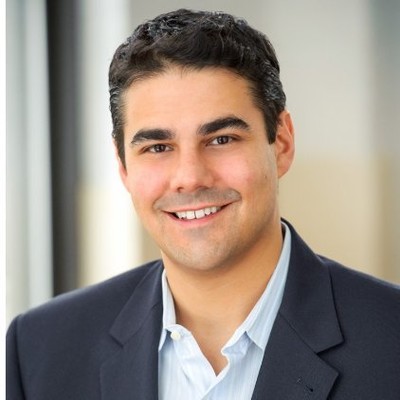 By Howard Katzenberg
Educational resources for brand owners
Updated October 19, 2026
How much does a trademark attorney cost? Most answers online are ranges with no source behind them. This guide uses published prices instead: what nine U.S. law firms say on their own websites they charge, checked in October 2026. The trademark attorney cost depends on several concrete factors: the type of filing, the complexity of your mark, whether you hit obstacles at the USPTO, and how long you plan to keep your registration alive.
It covers the government fees you cannot avoid, then what firms charge for a search, the application, office action responses, maintenance and oppositions, and what ten years of ownership can cost. Prices change, and every firm prices differently, so treat these as published examples, not quotes for your mark.
USPTO Filing Fees: The Non-Negotiable Baseline
Before any attorney touches your application, you owe the USPTO a government filing fee. (For more detail on what those fees changed and how to avoid surcharges, see our USPTO fee changes guide.) These fees changed significantly on January 18, 2025, when the USPTO replaced its old TEAS Plus / TEAS Standard two-tier system with a single base fee plus surcharges.
Current USPTO Application Fees (Effective January 18, 2025)
| Fee Component | Cost Per Class | When It Applies |
|---|---|---|
| Base application fee | $350 | Every application |
| Custom identification surcharge | $200 | If you write your own goods/services description instead of selecting from the USPTO ID Manual |
| Excess character surcharge | $200 | If your custom description exceeds 1,000 characters (per additional 1,000) |
| Insufficiency surcharge | $100 | If your application is missing required elements |
| Statement of Use (SOU) | $150 | Intent-to-use applications only, filed when you begin using the mark |
| SOU time extension | $125 | Each six-month extension (up to five allowed) |
What this means in practice: A straightforward, single-class application using a pre-approved description from the USPTO ID Manual costs $350 in government fees. A more complex filing with a custom description runs $550 per class. An intent-to-use application adds at least $150 more when you file your Statement of Use.
For a deeper look at the 2025 fee restructuring and how to avoid surcharges, see our guide on USPTO fee changes and how to avoid surcharges.
What law firms publish: searching and filing
Most trademark firms quote a flat fee for a standard application. These are the prices nine firms publish on their own sites. Attorney fees only, unless noted; the USPTO's $350 per class is extra unless a firm says otherwise.
| Firm | Published price | What it covers |
|---|---|---|
| Law Office of Michael Meyer | $600 | A trademark search and a single-class federal application, plus a $400 filing fee ($350 USPTO fee plus a $50 administrative fee) |
| Sherinian Law | $495 per class search, $500 per class filing | Word-mark search ($895 per class for a design mark); initial filing |
| Stadler IP Law | $850 search, $950 filing | Availability search; application filing |
| Jaburg Wilk | $900 | Single-class application ($1,250 with the USPTO fee); a registrability opinion letter is $500, or $1,500 extended |
| Legal Moves Law Firm | From $1,200 | Basic U.S. registration; a standalone clearance search is $150 |
| Harrigan IP | $1,200 or $2,500 | "Deluxe" and "comprehensive" packages |
| Terms.law | $1,950 | Clearance and filing package, one mark, one class |
| Gerben IP | $3,000 | Search and registration |
| IP Boutique Law | $2,000 to $4,000 | Registration services |
Read what each price includes before comparing them. Some cover a search and some do not; some are per class and some per application; a few include later work such as office action responses, and most do not.
Before paying for a search, run your own. A free trademark search of the federal register catches identical and sound-alike marks; GleanMark searches more than 14 million USPTO records. A professional search adds state registrations, common-law use and an attorney's judgment, which a register search cannot give you.
For the filing process itself, see our step-by-step guide to trademarking a name.
What law firms publish: office action responses
An office action is the examining attorney's letter listing what must change before the mark can register. Most flat filing fees do not cover the response, and firms price it by how hard the problem is.
| Firm | Published price |
|---|---|
| Sherinian Law | $250 per class for a routine office action (no likelihood-of-confusion issue); $999 per class for a likelihood-of-confusion refusal |
| Stone Law | $550 for an online office action response |
| Legal Moves Law Firm | $500 to $1,200 for a refusal response |
| Law Office of Michael Meyer | Typically $500 to $1,500, depending on complexity, for likelihood-of-confusion and descriptiveness refusals |
| Terms.law | $1,200 flat for a substantive response |
The USPTO charges nothing to file a response on time. If you need more time, a three-month extension costs $125. For how responses are argued, see our office action response strategies.
What law firms publish: oppositions and cancellations
An opposition is a challenge to an application, and a cancellation is a challenge to a registration. Both are decided by the Trademark Trial and Appeal Board, the USPTO's internal tribunal, and both work like a small lawsuit. Fewer firms publish prices for them. Two published schedules we found, from The Rapacke Law Group (2022) and Vic Lin of ICLG (2023), price filing a notice of opposition or petition to cancel from $1,800, and answering one at $1,800.
The USPTO's own fee to file an opposition or a petition to cancel online is $600 per class.
What law firms publish: keeping the registration alive
A registration lasts only if the owner files a declaration of use between the fifth and sixth year, and a declaration with a renewal every ten years. The optional Section 15 declaration, which makes the registration harder to challenge, can be filed alongside the first one.
| Firm | Section 8 and 15 (years 5 to 6) | Section 8 and 9 renewal (every 10 years) |
|---|---|---|
| Sherinian Law | $600 per class, plus $575 per class to the USPTO | $650 per class, plus $650 per class to the USPTO |
| Gerben IP | $800, plus $575 per class to the USPTO | $800, plus $650 per class to the USPTO |
Filed in the six-month grace period after a deadline, each of Sections 8 and 9 costs an extra $100 per class. For the deadlines themselves, see our guide to Section 8 and Section 9 maintenance deadlines. For what these per-class fees add up to across a large portfolio, see our look at celebrity trademark portfolios.
DIY vs. attorney: when each makes sense
Not every trademark filing requires an attorney, unless you are based outside the United States: then the USPTO requires one.
Filing on your own may work when:
- Your mark is clearly distinctive (an invented word or a unique design)
- You are filing in one class with a description available in the USPTO ID Manual
- A careful clearance search shows no close conflicts
- You understand the difference between use-based and intent-to-use filings
- You can commit time to learning the process and watching your application
Hire an attorney when:
- Your mark uses common or descriptive words
- You are filing in several classes or need a custom description of your goods or services
- Your search turns up marks that are close but not identical
- Your business depends heavily on this brand
- You are filing a design mark, a sound mark, or anything other than a standard word mark
The risk of filing on your own is not the filing fee; it is the cost of a refusal. If the application is refused and cannot be saved, the $350 per class is not refunded, and a new application means paying it again.
What pushes the cost up
Number of classes. The USPTO charges $350 for each class, and many firms price per class too: every fee on Sherinian Law's list above is per class.
Custom goods and services descriptions. Writing your own description instead of picking one from the ID Manual triggers a $200 per class USPTO surcharge, and a firm's time to draft it.
A crowded field. Where many similar marks already exist, clearance takes longer and refusals and oppositions are more likely.
What the quote leaves out. A low filing fee that excludes the search and every office action response can cost more in the end than a higher fee that includes them.
Costs that catch owners off guard
Office action responses. If you budgeted only for filing, a response is an extra charge at most of the firms above, from $250 to $1,500 depending on the firm and the problem.
Intent-to-use extensions. If you file before using the mark, each six-month extension of the deadline to show use costs $125 per class at the USPTO. All five extensions add $625 per class in government fees alone, plus any attorney time.
Watching for conflicts. After registration, someone has to watch for new applications and infringers. GleanMark watches more than 14 million USPTO records, with alerts that usually arrive within a day or two of a new filing.
Enforcement. A cease-and-desist letter and, if it fails, a lawsuit are billed separately from registration work.
Foreign filing. Protection outside the United States through the Madrid Protocol costs a USPTO certification fee of $100 per class, plus fees paid to WIPO that depend on the countries you choose.
How to keep the cost down
Search first. The cheapest conflict is the one you find before filing. Start with a free search, then pay for a professional search if the results are close.
Use the ID Manual. Picking a description from the USPTO ID Manual avoids the $200 per class surcharge and makes an office action less likely.
File only the classes you need now. You can add classes later with a new application.
Respond to office actions on time. You have three months, and one three-month extension for $125.
Compare what quotes include, not just the headline price.
File maintenance early in the window. Filing during the regular one-year window avoids the $100 per class grace-period surcharge.
Ten years of ownership, two published examples
For one class over ten years with no disputes, the government fees alone are $350 to file, $575 for Sections 8 and 15, and $650 for the Section 8 and 9 renewal: $1,575 in total if you file everything yourself.
Using one firm's complete published price list, Sherinian Law, the same ten years with an attorney look like this:
| Step | Attorney fee | USPTO fee |
|---|---|---|
| Word-mark search | $495 | None |
| Application (one class) | $500 | $350 |
| Sections 8 and 15 (years 5 to 6) | $600 | $575 |
| Section 8 and 9 renewal (year 10) | $650 | $650 |
| Total | $2,245 | $1,575 |
That is $3,820 over ten years before any office action; one likelihood-of-confusion response at the same firm adds $999.
The bottom line
Among the published prices above, searching and filing one class costs from $600 to $3,000 in attorney fees, before the USPTO's $350. The bigger differences come later: whether office actions are included, what maintenance costs, and whether a dispute ever arises.
The best money is spent at the start. A careful clearance search catches conflicts when they are cheapest to fix. For a side-by-side look at search and monitoring tools, see our comparison of the best trademark search and monitoring tools for 2026.
Firm prices are as published on each firm's website, checked October 13, 2026; they change, and they are not quotes for your mark. USPTO fees are from 37 C.F.R. 2.6. This article is not legal advice.