Most TTAB Disputes Never Reach a Judge: 92% of Q1 Terminations Ended in Default, Settlement, or Procedure
Here is the number every brand-enforcement budget should be built around: in the first quarter of 2026, out of 2,404 opposition and cancellation terminations at the Trademark Trial and Appeal Board,
 By Howard Katzenberg
Founder, GleanMark
Here is the number every brand-enforcement budget should be built around: in the first quarter of 2026, out of 2,404 opposition and cancellation terminations at the Trademark Trial and Appeal Board, exactly 180 reached a contested decision on the merits. That is 7.5%. The other 92-plus percent ended because someone didn't answer, someone settled, someone walked away, or a procedural ruling closed the file. The TTAB is often described as trademark litigation. Most of the time, it is trademark default collection.
Contested filings themselves slipped 2.9% quarter-over-quarter, to 2,766. That is the tidy headline. It is also the least interesting fact here.
1. Filing Volume
Contested TTAB filings — oppositions plus cancellations — totaled 2,766, down from 2,849 the prior quarter, a decrease of 83 proceedings.
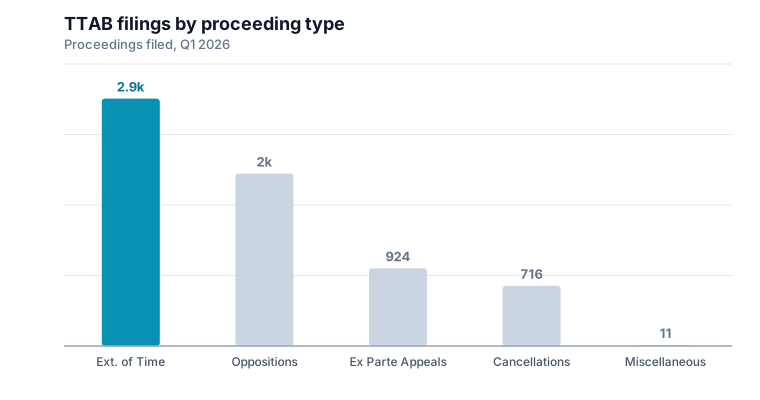
| Proceeding Type | Current Quarter | Prior Quarter | Count Change | QoQ Change | Contest Status |
|---|---|---|---|---|---|
| Extensions of Time to Oppose | 2,932 | 3,339 | -407 | -12.2% | Pre-dispute review¹ |
| Oppositions | 2,050 | 2,107 | -57 | -2.7% | Contested |
| Ex Parte Appeal | 925 | 974 | -49 | -5.0% | Applicant appeal¹ |
| Cancellations | 716 | 742 | -26 | -3.5% | Contested |
| Miscellaneous | 11 | 6 | +5 | +83.3% | Other |
The softening is broad, not concentrated. Oppositions, cancellations, and ex parte appeals each fell in the low single digits; extensions dropped hardest, off 12.2%. Extensions are the loudest line on the board and the least conclusive: an extension is a party buying time to decide whether to oppose a published application, not a dispute. A drop in extensions is a leading indicator that some fights simply won't be picked — worth watching next quarter to see whether the contested lines follow it down.
Ex parte appeals sit outside the contested count entirely. Those 925 filings are applicants challenging an examiner's refusal, not parties fighting each other. They tax the Board's workload; they don't belong in a litigation tally.²
2. Outcomes by Proceeding Type
| Proceeding Type | Proceedings with a Decision | Decision Entries | Sustained | Granted | Affirmed | Reversed | Dismissed or Denied | Moot | Reconsideration | Other Procedural |
|---|---|---|---|---|---|---|---|---|---|---|
| Oppositions | 1,827 | 1,846 | 1,107 | 0 | 3 | 0 | 696 | 3 | 4 | 33 |
| Ex Parte Appeal | 796 | 832 | 0 | 0 | 77 | 17 | 210 | 28 | 378 | 122 |
| Cancellations | 677 | 691 | 0 | 394 | 1 | 0 | 279 | 6 | 0 | 11 |
| Extensions of Time to Oppose | 3 | 3 | 0 | 0 | 0 | 0 | 0 | 0 | 3 | 0 |
| Concurrent Use | 1 | 1 | 0 | 0 | 0 | 0 | 0 | 0 | 0 | 1 |
Two cautions before anyone quotes these rows. First, proceedings and decision entries are not the same thing — a single opposition can generate more than one entry, which is why the entry columns exceed the proceeding count. Second, the vocabulary shifts by proceeding type, and conflating the terms is the fastest way to misread the docket. In oppositions a plaintiff win is "sustained" (1,107 entries); in cancellations it is "granted" (394); in an ex parte appeal there is no plaintiff at all — "affirmed" means the examiner's refusal stood (77), "reversed" means it fell (17). Same board, three different scoreboards.
The ex parte column that jumps out is reconsideration: 378 entries against 796 proceedings. Applicants who lose in front of an examiner ask the Board to look again, often. Few of those requests move the outcome.
3. How Disputes End: Defaulted, Settled, or Contested
| Proceeding Type | Terminated Matters | Default Judgment | Settlement or Withdrawal | Contested Merits | Other Procedural |
|---|---|---|---|---|---|
| Oppositions | 1,785 | 875 (49.0%) | 641 (35.9%) | 92 (5.2%) | 177 (9.9%) |
| Cancellations | 619 | 292 (47.2%) | 104 (16.8%) | 88 (14.2%) | 135 (21.8%) |
This is the table that matters. Defaults were the single largest exit in both categories — 1,167 of 2,404 terminations, or 48.5%. A default is not a win. It is a respondent who never showed up.
A default judgment isn't a courtroom victory — it's a phone that rang and nobody picked up. Treat it as one and you'll badly overrate what winning at the TTAB actually costs your opponent.
— Howard Katzenberg, Founder, GleanMark
Settlements and withdrawals came next, 745 terminations combined, or 31.0%. Add defaults and settlements and you have four out of five disputes resolved before anyone briefs a contested issue.
The contested-merits residue is small and lopsided. Oppositions litigated to the merits just 5.2% of the time. Cancellations did so nearly three times as often, 14.2%. We think this likely reflects selection: an opposition is cheap insurance a brand owner files off a Gazette watch, and most get abandoned or settled once the applicant weighs the cost. A cancellation attacks a registration someone already paid to obtain and has an incentive to defend — so the fights that survive to a merits ruling skew toward cancellations. That is a hypothesis, not a proven causal claim, but it fits the shape of the numbers.
4. High-Profile Proceedings
The quarter's marquee names clustered, unsurprisingly, on the last two weeks of March — the tail end of a filing period.
| Brand | Proceeding | Filed | Type | Status |
|---|---|---|---|---|
| Google LLC | 91306268 | Mar. 31, 2026 | Oppositions | Suspended |
| Apple Inc. | 91306247 | Mar. 30, 2026 | Oppositions | Terminated |
| Microsoft Corporation | 91306174 | Mar. 26, 2026 | Oppositions | Pending |
| Louis Vuitton Malletier | 91305942 | Mar. 17, 2026 | Oppositions | Suspended |
The status column tells the real story, and it maps neatly onto Section 3. Apple's 91306247 was already terminated within days of filing — the fast-exit pattern that produces so many defaults and quick settlements. Google's 91306268 and Louis Vuitton's 91305942 are suspended, the usual sign that the parties are talking. Only Microsoft's 91306174 remains actively pending.
Louis Vuitton's presence here is consistent with a brand that enforces relentlessly and on multiple fronts; in the same window the house was pursuing statutory-damages campaigns against online counterfeiters and litigating the boundaries of luxury "upcycling" up to Korea's Supreme Court. An opposition on the TTAB docket is a small, routine instrument in that toolkit — front-end policing, not the main event.
Practitioner Takeaways
- Budget for defaults, not trials. Nearly half of inter-partes terminations ended in default and only 7.5% reached a contested merits decision. If your enforcement model assumes you'll litigate, your model is mispriced.
- A "sustained" opposition and a "granted" cancellation are wins; an "affirmed" appeal is a loss for the applicant. The terms don't travel across proceeding types — don't let a summary conflate them.
- Watch the extension line. Extensions fell 12.2% this quarter. That is often where a slowdown shows up first, before it reaches oppositions and cancellations.
- Cancellations are the harder fight. They reached a merits ruling almost three times as often as oppositions. If you're defending a registration, expect a real contest more often than the opposition statistics would suggest.
- Big-brand filings are monitoring, not war. Google, Apple, Microsoft, and Louis Vuitton all appear here, and three of the four matters were already terminated, suspended, or resolving. The register is where large owners keep watch, not where they usually go to trial.
¹ Extensions of time to oppose and ex parte appeals are excluded from the contested-filing headline: an extension is a pre-dispute step and an ex parte appeal is an applicant-versus-examiner matter, not a party-versus-party contest.
² Figures reflect proceedings as recorded through March 31, 2026 and will change as cases progress. This report is informational and does not constitute legal advice. Data sourced from USPTO TTAB records.
Explore more USPTO data analysis on the GleanMark Insights blog.
Related Articles
Zara, Nike, and a Wave of Big Tech Watch-Filings: TTAB Disputes Climbed 5.5% in Q2 2026
July 5, 2026
TTAB Q4 2025: Opposition Plaintiffs Won Roughly Five of Every Eight Decisions
June 4, 2026
Challengers Won Most TTAB Oppositions in Q3 2025 — and Big Tech Filed a Late-September Wall of Them
June 4, 2026